June 30, 2026, KCA Weekly Update

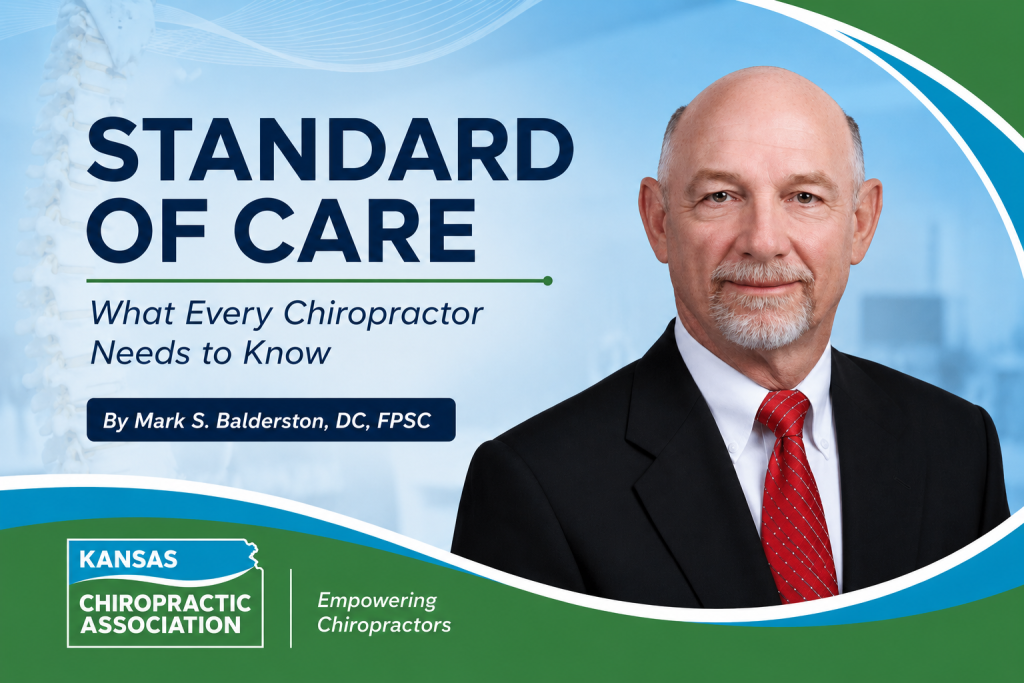
Are You Truly Meeting the Standard of Care?
Every chiropractor strives to provide excellent patient care, but are you meeting the legal and professional standard expected of your practice? In this thoughtful article, Mark S. Balderston, DC, FPSC explores what the standard of care means in chiropractic, common situations that can place a license at risk, and practical steps every chiropractor can take to protect both patients and their practice. Whether you’re a new graduate or a seasoned practitioner, this is an important reminder that maintaining the standard of care is an ongoing professional responsibility. Click Here to Read (KCA Member Benefit – must be logged in to view)

Research Spotlight: The Power of Patient Education
A recently published study in the journal BMJ Open examined how different explanations of rotator cuff-related shoulder pain influence patients’ beliefs about their condition and the treatments they think they need.
Researchers randomized more than 2,200 people with shoulder pain to receive one of three educational approaches:
• Best practice education emphasizing reassurance, recovery, and self-management
• Best practice education combined with pain science education
• Structure-focused education emphasizing tissue damage and structural causes of pain
The findings were striking. Participants who received structure-focused explanations were more likely to believe they needed imaging, injections, surgery, medication, rest, and activity restrictions. They were also less likely to view exercise as an appropriate treatment option.
In contrast, participants who received best practice education were more likely to favor exercise and other self-management strategies and were less likely to feel they needed potentially unnecessary interventions.
The study highlights an important clinical reality: the words healthcare providers use matter. The way a condition is explained can influence patient expectations, treatment decisions, and healthcare utilization.
This research was authored and submitted through Clinical Compass, the chiropractic profession’s leading evidence-synthesis organization. Clinical Compass develops clinical practice guidelines, systematic reviews, evidence summaries, and other resources that help clinicians translate research into practice.
As a Kansas Chiropractic Association member benefit, all KCA members receive complimentary access to the Clinical Compass Evidence Center, providing access to research summaries, clinical guidelines, and evidence-informed resources to support patient care and professional development.
KCA Connect Is Now Available
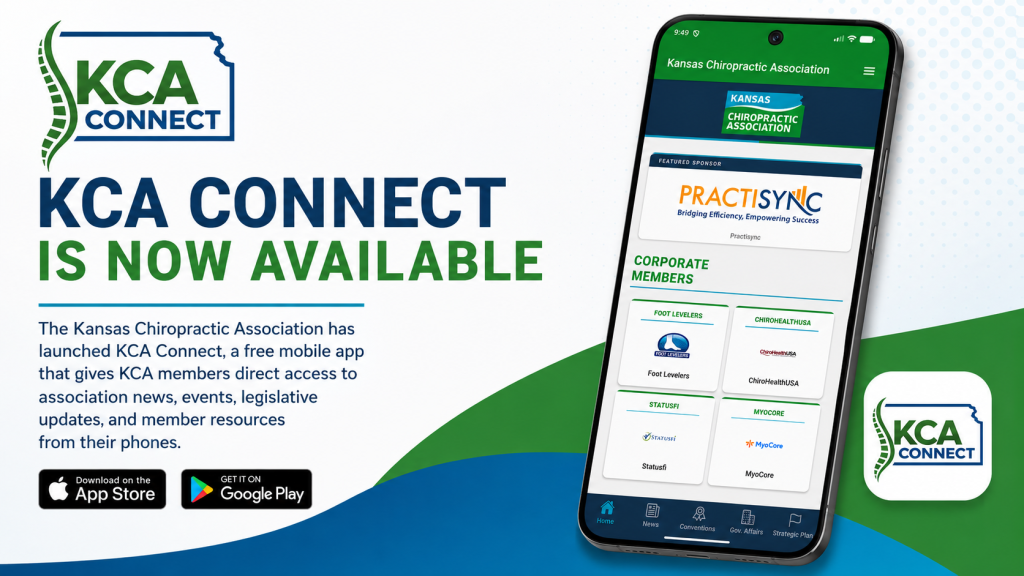
The Kansas Chiropractic Association has launched KCA Connect, a free mobile app that gives KCA members direct access to association news, events, legislative updates, and member resources from their phones.
What’s in the app
KCA Connect brings together the information members use most — in one place, updated automatically from the KCA website.
- News — the latest posts from kansaschiro.com, including member-only content
- Events — upcoming conventions, CE seminars, and webinars with dates, pricing, and registration links
- Governmental Affairs — legislative updates, KSBHA actions, and action alerts when member voices are needed at the Statehouse
- Strategic Plan — KCA’s current mission, vision, values, and goals
- KCA Leadership — the full Board of Directors with direct contact information
- On Demand CE — access to the KCA on-demand course catalog
Turn on notifications
When you install the app, please enable push notifications. KCA will use them to reach you when it matters most — legislative action alerts when chiropractors need to contact their legislators, event announcements, registration deadlines, and other time-sensitive updates from the association.
If you miss the prompt when you first open the app, you can turn notifications on manually: go to your phone’s Settings, find KCA Connect, and enable notifications there.
How to download it
iPhone:
- Open the App Store
- Search for KCA Connect
- Tap Get to install
Android:
- Open the Google Play Store
- Search for KCA Connect
- Tap Install
The app is free and available to anyone. No login is required.

Front Desk HIPAA Security: Simple Areas Every Office Should Review
When most chiropractic offices think about HIPAA compliance, they think about forms and privacy notices. However, one of the most important — and often overlooked — parts of HIPAA compliance is physical security at the front desk.
The reception area is where patient information is most likely to be accidentally exposed. Phones ring constantly, insurance cards are handled, schedules are visible, payments are processed, and conversations happen in busy public spaces. Small issues can quickly become compliance risks.
As part of a basic HIPAA risk assessment, offices should periodically walk through the front desk area and look for common vulnerabilities, including:
- Computer screens visible to patients
- Printed schedules or paperwork left unattended
- Sticky notes containing passwords
- Patient conversations that can easily be overheard
- Unlocked workstations
- Improper shredding or disposal of documents
- Staff-only areas accessible to the public
Practices should also review workstation security, password policies, automatic screen locks, and whether staff are following appropriate privacy procedures during check-in and checkout.
HIPAA risk assessments are not intended to be “one-time” projects. They should be ongoing reviews of how patient information is protected within the office.
KCA members have access to Statusfi, the Kansas Chiropractic Association’s compliance platform designed to help chiropractic offices manage HIPAA, OSHA, documentation, policy tracking, staff training, and other regulatory requirements.
For offices unsure where to begin, conducting a simple front desk security review is an excellent first step.